
Resolve Bamboo Feedstock and Finished Fibre Before Quoting Linens
Separate finished-fibre identity from bamboo-source wording, and connect the supplier’s material answer to the linen actually quoted.
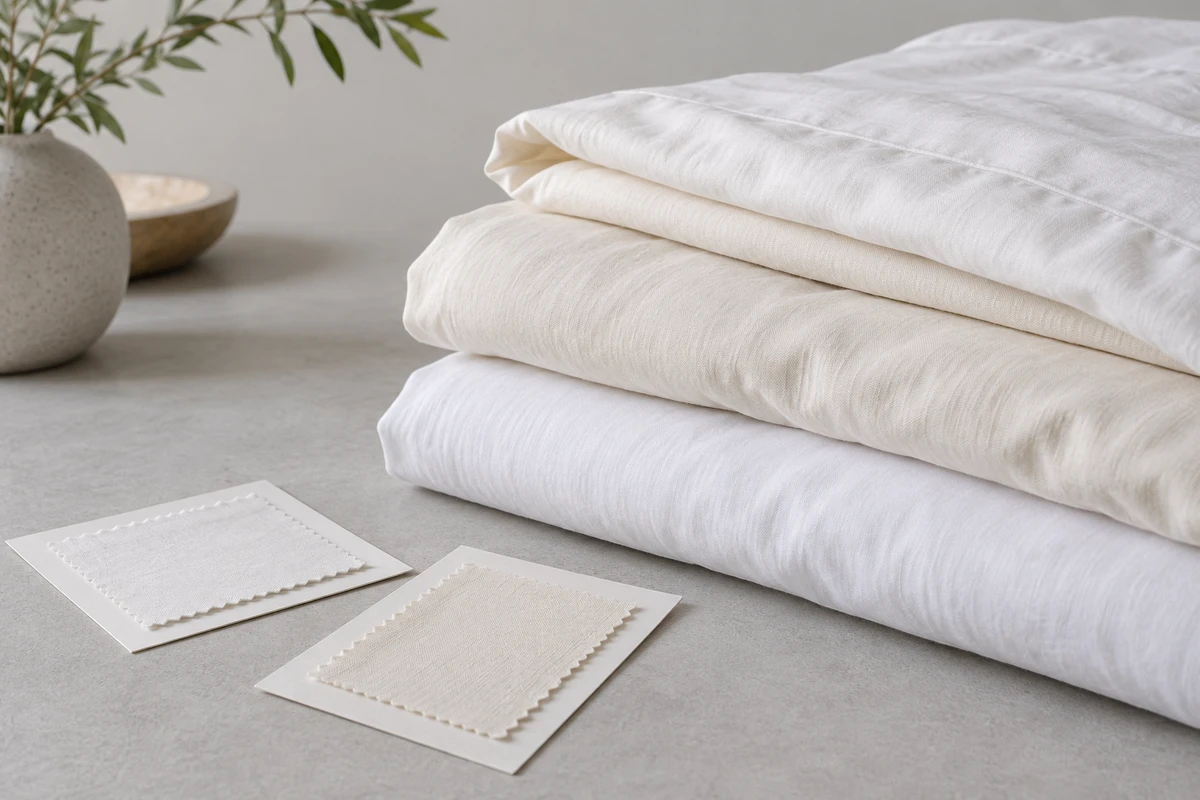
When a linen quote says “bamboo,” ask two separate questions: what is the finished fibre, and what evidence supports the stated plant source? Put the answers in different fields before approving the material description. A plant-source term should not be used to fill a missing finished-fibre identity.
This matters when a listing, fabric statement and proposed sales wording use different names for the same offered linen. The buyer needs a reconciled material requirement for the actual product, with any unresolved wording clearly identified before labels or listings are prepared.
Keep the fibre name separate from the source material
US Federal Trade Commission guidance distinguishes directly made bamboo fibre from manufactured fibre for which bamboo was the plant source. Its August 2009 guidance says the latter should use the proper generic fibre name, giving rayon and rayon made from bamboo as examples. It also requires evidence for a claim that a textile is actual bamboo fibre. The page remains available at this review; it is US guidance, not a worldwide label template. FTC guidance on bamboo textile descriptions
Use that distinction to structure the supplier question. Ask for the generic name of the finished fibre and the composition of the specified fabric, then ask separately whether a bamboo-source statement is proposed and what supports it. Do not resolve conflicting documents by choosing whichever wording sounds more attractive to customers.
If the supplier uses different terminology across languages or documents, preserve the original terms with their document references. Ask the responsible reviewer to reconcile them. A purchasing translation should not silently convert a plant-source description into a fibre identification.
Identify the fabric that the supplier actually priced
Anchor the response to the finished item, selected colour and supplier fabric reference. For a linen set, identify which fabric the material statement covers. If the face, reverse or another separately specified textile differs, ask for a component-specific answer rather than copying one description over the whole item.
Request the name of the party responsible for the composition statement and its connection to the quoted fabric. A supplier may have a document for a different fabric it also sells. The useful answer explains which offered material the evidence describes and how the supplier connects it to the proposed finished linen.
Keep current evidence apart from proposed future work. A report that the supplier plans to obtain is an RFQ deliverable, with scope and timing still to agree. It should not appear in the comparison as a result already reviewed. Where evidence is insufficient, ask the qualified material reviewer to define what would answer the specific identity question; this article does not prescribe a laboratory method.
Give material identity and proposed wording different owners
The supplier should identify the offered construction and provide the available supporting records. The buyer’s appropriate material reviewer assesses whether those records answer the finished-fibre requirement. The person responsible for destination wording then decides which product description is supportable for that market and channel.
Record those roles even when one person holds more than one of them. Receiving a fabric statement, confirming that it concerns the quoted material and approving consumer-facing copy are separate decisions. An administrative “documents received” entry should not close all three.
Ask for an exact proposed phrase rather than a broad request to approve “bamboo marketing.” Include where the phrase would appear, such as the sewn label or product listing. A phrase reviewed for one identified fabric should not be extended to a whole assortment without a decision covering those additional items.
Use a finished-fibre and wording worksheet
Create one record for the fabric used in each quoted linen variant. Keep the supplier’s original description next to the reconciled requirement so later changes remain visible.
| Field | Answer to request | Buyer decision it supports |
|---|---|---|
| Finished linen and fabric | Item reference, selected variant and fabric identifier | Which offered material is under review? |
| Finished-fibre name | Supplier’s exact generic fibre description | Is the material identity stated clearly? |
| Composition | Declared percentages and covered textile components | Does the answer cover the fabric being purchased? |
| Plant-source statement | Exact optional source wording, or none proposed | Is a separate bamboo-source claim being requested? |
| Supporting evidence | Attributable reference, stated scope and link to this fabric | What question does the evidence actually answer? |
| Responsible reviewers | Material reviewer and destination-wording owner | Who can resolve an identity or wording conflict? |
| Wording disposition | Approved wording reference, pending question or removed phrase | What may the quote and later copy rely on? |
A row can have a clear offered fibre description while its plant-source wording remains pending. Conversely, a supplier may provide a story about feedstock while leaving the finished fibre unnamed. Record those as different gaps; they require different answers.
Work through a fictional bamboo and rayon conflict
Imagine a fictional pillowcase offer P1. Its marketplace title says “bamboo linen,” while material statement M1 identifies the quoted fabric as rayon. M1 is a fictional supplier declaration, not an authenticated test report. The buyer has not approved any label wording.
The first question is whether M1 describes the exact fabric priced for P1. Suppose the supplier’s clarification links P1 to fabric R1 and confirms that M1 concerns R1. That resolves the supplier’s intended reference for review; it does not independently verify composition. Keep the quoted title and M1 side by side rather than editing one to make the record look consistent.
The second question is what supports the bamboo-source phrase. In this fictional reply, the supplier repeats the listing title but supplies no additional source evidence. The worksheet therefore records “rayon declared; material evidence review pending” and “bamboo-source wording unresolved.” Neither entry becomes a finding that the fabric is actual bamboo fibre.
If the buyer’s product brief requires actual bamboo fibre, the rayon offer is an alternative requiring a new buying decision. Removing bamboo from the proposed description does not make that alternative satisfy the original fibre requirement. If the buyer is willing to consider the declared rayon fabric, it can continue that evaluation while the appropriate reviewer settles the evidence and exact destination wording.
The example produces a concrete next request: confirm the agreed fibre requirement, identify the evidence for R1, and return any proposed plant-source wording separately. No material result, certification or real supplier capability is implied.
Remove optional wording without hiding a material change
When an optional phrase cannot be supported, ask the wording owner whether it should be removed from the proposed copy. Preserve the decision and the remaining material requirement. Do not treat deleted copy as a substitute for resolving what fabric is being bought.
Likewise, ask for a new response if the supplier proposes another fabric to satisfy the brief. Record the alternative fabric identity and its evidence separately from the first offer. A familiar listing URL or identical colour photograph should not obscure a change in the offered material.
Avoid adding antimicrobial, organic or environmental promises to complete an otherwise plain description. Each would introduce an additional evidence question. The narrow RFQ goal here is to settle the fibre and any separately proposed bamboo-source wording, without turning the quote into a collection of unreviewed claims.
Ask for a usable material answer
A concise request can say: identify the exact finished linen and fabric; state its finished-fibre name and composition; distinguish any plant-source phrase; cite the evidence available for each; and list what remains unanswered. Ask the supplier to repeat the agreed fabric reference on its revised quotation.
Use the Home textiles page for category context. In a Homeware sourcing request, describe the conflict between the listing and the material statement and identify the variant involved. The form supports product references, text and image previews. Agree an appropriate separate exchange for complete material records; the image-upload field is not a PDF document channel.
Frequently asked questions
Can a supplier’s “bamboo” listing title serve as the material specification?
Use it as the supplier’s proposed wording, then ask for the finished-fibre name and composition of the quoted fabric. Keep any plant-source statement in a separate field. The useful buying record connects those answers to the particular linen variant and shows who reviewed unresolved evidence or terminology.
What if the sample feels right but the fibre statement is unclear?
Record the sample as an appearance or handle reference within its agreed scope, and leave the material question open. Ask for evidence addressing fibre identity and its connection to the offered fabric. A favourable tactile impression should not be entered as the answer to a documentary composition question.
Can I remove “bamboo” from the wording and accept the quote as rayon?
First decide whether rayon meets the buyer’s material requirement. Removing an optional phrase changes the proposed copy; it does not authorize a fabric substitution or verify the composition. If the buyer agrees to evaluate the rayon offer, retain its identity, evidence needs and destination-wording review as explicit conditions.
Should every item in a linen set use the same fibre description?
Only use a shared description where the product-specific evidence and wording decision cover the relevant components. Ask which fabric statement belongs to the pillowcases, sheet or other separately specified textile. Keep a different fabric or an unanswered component visible rather than extending one statement across the set for convenience.
Sources
Discuss a sourcing request related to this article.Resolve Bamboo Feedstock and Finished Fibre Before Quoting Linens