
Duvet Cover Set RFQ: Match the Insert, Pillowcases and Closure
Define duvet-cover dimensions, pillowcase sizes and counts, openings and included pieces before comparing wholesale sets for your existing bedding.
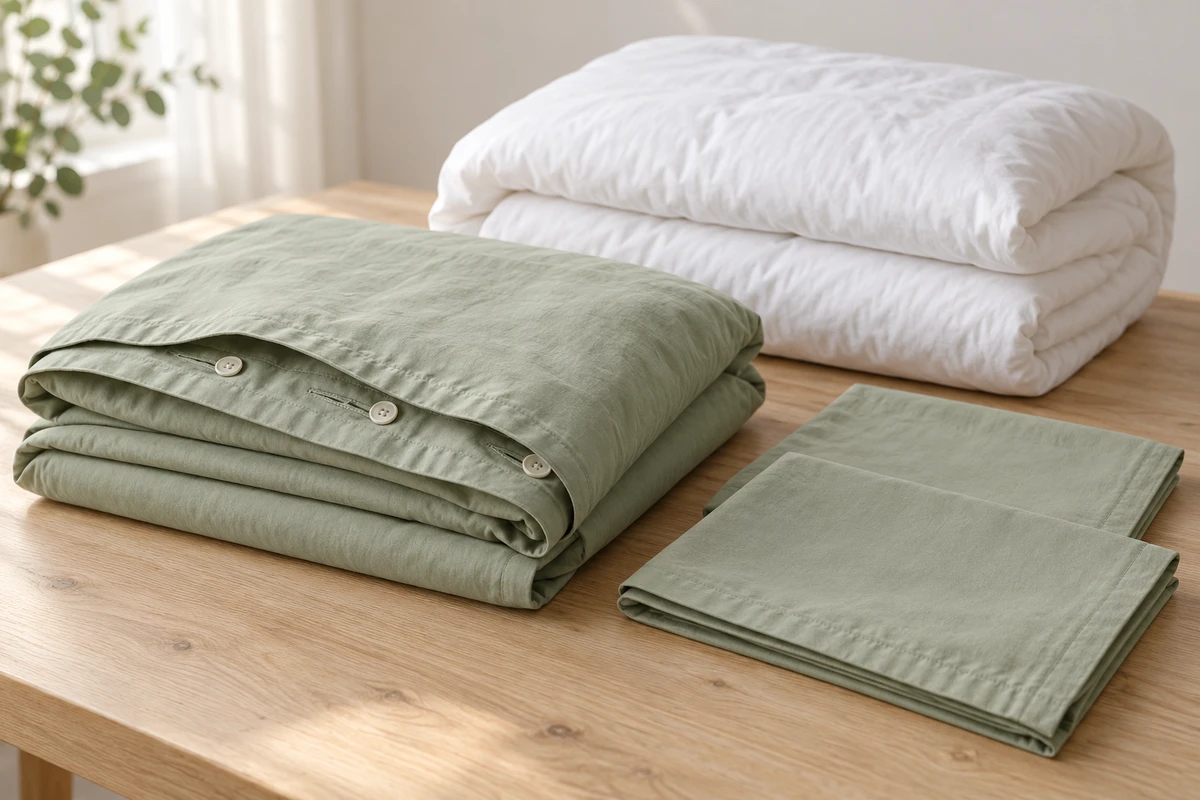
When replacing duvet covers while keeping existing bedding, specify the inserts and pillows first. A set name such as Queen does not tell a supplier the exact cover dimensions, pillowcase mix or opening arrangement your rooms need. The RFQ should define a usable cover set for those retained items before suppliers compare set prices.
Treat the duvet cover and each pillowcase type as separate components of the requested set. State whether inserts, sheets or extra cases are included, excluded or quoted as options. A styled bedroom photograph cannot supply that contents list.
Start with the bedding that will remain in service
Identify each insert size and record its dimensions in stated units. Keep the insert’s supplier designation beside the dimensions if it is available. If the buyer has several insert shapes or sizes, make separate set requirements rather than combining them under one bed-size label.
List the pillows independently. Record the pillow size, how many pillows of that size belong to one required set, and any difference between sleeping pillows and decorative pillows. A supplier’s default pillowcase pairing may not match the pillows the buyer is retaining.
Specify how the proposed cover and case dimensions are to be understood, including the relevant measurement condition and any agreed tolerances. Do not prescribe a universal amount of extra fabric around an insert. Ask the supplier to propose the matching finished article and identify any difference from the buyer’s requested fit.
The purchase is for covers that work with an identified bedding inventory. Mattress dimensions may help explain the room arrangement, but they do not replace the dimensions of the duvet insert being enclosed.
Unpack the word “set”
A named retailer example makes the missing fields visible. IKEA’s PILTANDVINGE 805.792.09 listing in Puerto Rico describes an 86 by 86 inch duvet cover and two 20 by 30 inch pillowcases. It also specifies a press-stud opening at the bottom of the cover and envelope openings for the cases. Those details concern that exact product, not a universal Queen-set definition. IKEA PILTANDVINGE dimensions and closures
Ask your supplier for the same level of component detail. “Three pieces” could be a useful quantity description only after the three pieces are named. Make the cover count, pillowcase count and case size explicit. If a product title says “bedding set,” ask whether the seller means covers only or also supplies a sheet or filled item.
Separate optional extras from the base set price. A missing long pillowcase should be quoted as a missing requirement, not assumed to be included because a shorter case appears in the photograph. Likewise, two unwanted cases do not replace two cases of the required dimensions.
Describe the openings people will use
Name the requested cover closure and its location. If the supplier proposes buttons, press studs, a zip or another arrangement, ask for an identified detail image or drawing showing the offered opening. State whether a visible or concealed closure matters to the buyer’s presentation requirement.
Keep the pillowcase opening separate from the duvet-cover opening. An envelope pillowcase is not described by the cover’s zip specification. Ask how the supplier defines the case’s finished dimensions and whether any flap or decorative border is included in those dimensions.
If internal ties or another attachment feature are required, say where and what they are intended to connect to on the existing insert. Ask the supplier to identify the offered feature; do not infer ties from an exterior photo or assume the insert provides matching attachment points. This is a specification question, not an instruction to modify the insert.
For directional patterns, mark the intended top and bottom on the appearance reference and identify the closure edge. That helps the supplier price the correct arrangement without deciding on the buyer’s behalf which way the design should face.
Use a component-based set worksheet
Give each retained insert-and-pillow combination its own worksheet. The supplier can then show where a stock set answers the brief and where a separate case or custom option is needed.
| Component or decision | Requirement to record | Response that closes the question |
|---|---|---|
| Existing duvet insert | Insert reference, length and width | Proposed matching cover dimensions and identified variant |
| Duvet cover opening | Closure type, edge and required appearance | Actual closure detail for the quoted cover |
| First pillowcase type | Pillow dimensions, case requirement and count per set | Finished case dimensions, opening and included quantity |
| Additional pillowcase type | Any different pillow size or extra case count | Separate component quote or explicit set inclusion |
| Internal attachment feature | Required feature and existing insert interface, if any | Model-specific description; absence stated if not offered |
| Excluded bedding | Inserts, pillows, fitted/flat sheets or other items not being bought | Written contents list matching the priced set |
| Quantity and alternative | Number of complete required sets; acceptable deviations | Exact assortment, any additional pieces and resulting price |
Use “not specified” when a case dimension or closure is absent. A complete price cell does not make an incomplete set comparable.
A fictional set with the wrong pillowcase length
Suppose a buyer is refreshing six rooms and chooses two cover changes per room. Each change requires one cover for an existing 220 by 200 cm insert and two cases for existing 50 by 90 cm pillows. The purchase requirement is therefore 12 covers and 24 matching long pillowcases. All dimensions, quantities and quotations here are fictional.
The first supplier offers a “Queen three-piece set.” After clarification, its cover is described as 220 by 200 cm, with fit to the retained insert still to be reviewed. The two included cases are specified as 50 by 70 cm. The case proposal does not answer the buyer’s 50 by 90 cm pillow requirement. The set label and total piece count have hidden a component mismatch.
A second supplier quotes 12 identified covers and 24 cases expressly proposed for the retained long pillows. Its closure details are still missing. The buyer now has two different open questions: an assortment change for the first supplier and an opening specification for the second. Neither response should be marked complete yet.
Ask the first supplier to price the required long cases and state whether the shorter cases can be removed from the assortment. If it can supply only the fixed stock set, record the unwanted short cases as extra purchased pieces alongside the separate long-case requirement. Do not subtract an invented resale value or pretend those pieces meet the room plan.
Ask the second supplier to describe the cover and case openings. Once both suppliers return complete proposals, compare the actual complete-set scope, any extra pieces, sample terms and prices. Review a matched cover-and-insert sample and the correct pillowcase combination before choosing the assortment.
Keep sample fit and supplied contents connected
Request the cover and pillowcases that correspond to the quoted set, with a reference for each size. Review their fit with the intended retained bedding and record the closure arrangement actually supplied. A sample cover accompanied by a different pillowcase does not settle the set as a whole.
If one component is acceptable and another is unresolved, preserve that split decision. The buyer may accept the cover proposal while requesting another pillowcase, but the final quote must reflect the chosen combination. Do not let “sample approved” conceal the component still awaiting review.
Use the Homeware textile sourcing guide for the separate fabric, care and dimensional-review basis. This article makes no warmth, comfort or wash-performance claim for the proposed set.
Request the assortment you actually need
A practical inquiry can say: “We are retaining inserts [dimensions/reference] and pillows [dimensions/reference]. Quote [quantity] sets, each containing one specified duvet cover and [count] pillowcases of [required dimensions]. Describe each opening and any requested internal attachment features. Exclude filled inserts and sheets unless separately itemised, and identify differences from your stock set.”
The Homeware textile category provides broader sourcing context. Send the product link and compact component brief through the Homeware sourcing page, using supported images for opening or appearance references where helpful. The buying decision should follow the resolved cover-and-pillowcase combination, rather than the largest piece count or most familiar bed-size name.
Frequently asked questions
What is included in a wholesale duvet cover set?
The quotation should list each component and count: the duvet cover, each pillowcase size, and any other included item. Ask whether filled inserts and sheets are excluded or separately priced. A three-piece title does not identify case dimensions or prove that the pieces match your retained bedding.
How do I match a duvet cover to existing inserts?
Identify the actual insert and its dimensions, then request the supplier’s proposed finished cover dimensions and fit basis. Keep the measurement condition and agreed tolerances clear. Do not substitute the mattress size or a regional bed name for the insert specification, and review the intended combination before approving a whole set.
Should pillowcase size and quantity be separate RFQ lines?
Yes, identify each case type within the set even if the supplier gives one bundled price. Record the retained pillow dimensions, required case dimensions or fit proposal, opening and count per set. This reveals whether a stock bundle includes the wrong case size and lets the supplier quote a revised assortment or a separate missing component.
How do I specify buttons, snaps, zips or corner ties?
Describe the desired feature, its location and the part it belongs to. Keep the cover opening separate from the pillowcase opening. For internal ties, identify the intended connection on the retained insert and ask whether the quoted cover includes a matching arrangement. Request a model-specific detail rather than assuming the feature exists from an exterior photograph.
Sources
Discuss a sourcing request related to this article.Duvet Cover Set RFQ: Match the Insert, Pillowcases and Closure