
Food Container Handover: Keep Base and Lid Oven Instructions Separate
Correct a blanket oven-safe handover card for an already selected glass container and lid, keeping component limits and replacement-lid changes clear to recipients.
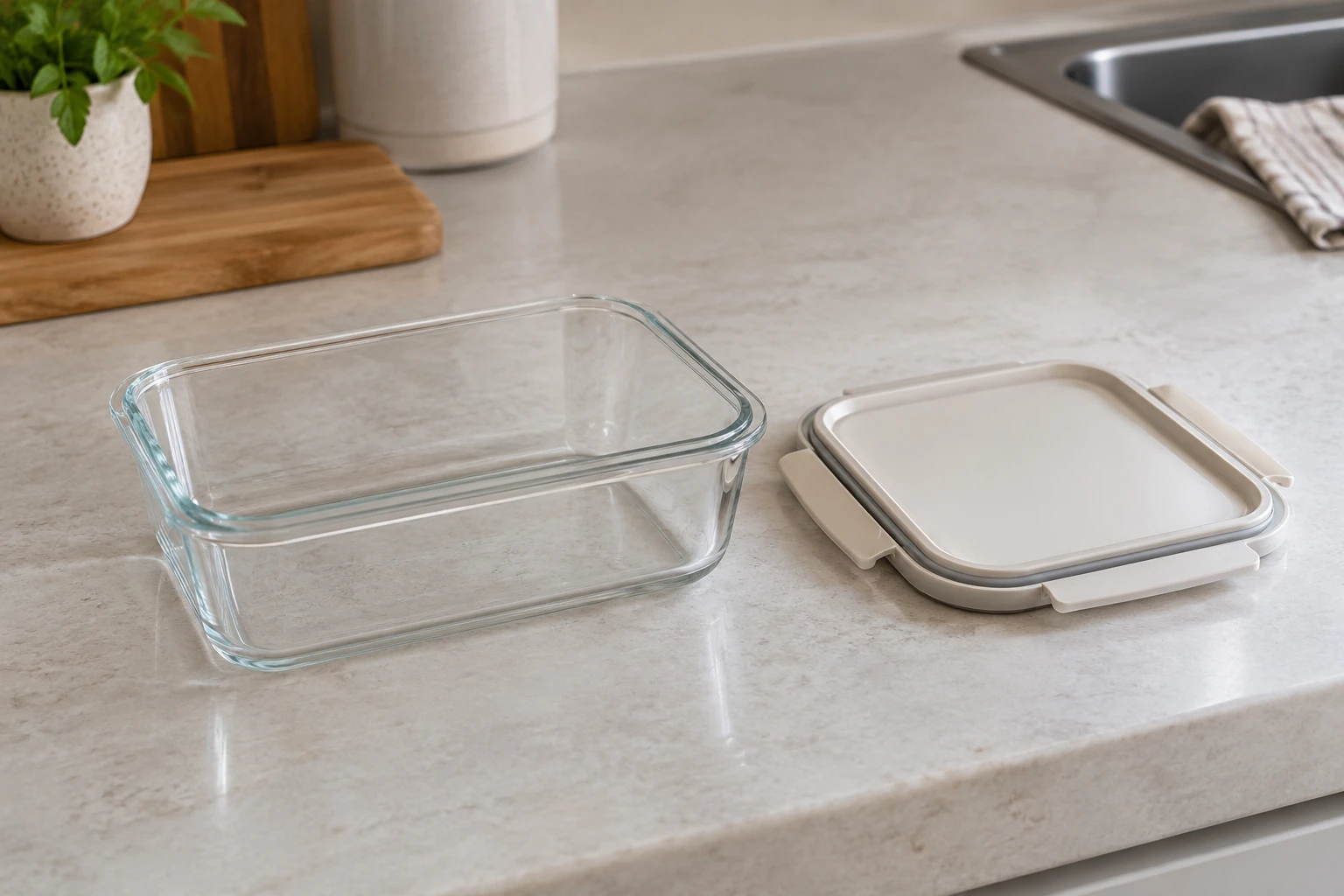
Hand over the use limits for the glass base and its particular lid separately. When an already selected container permits oven use for the base but excludes the lid, a room or kitchen card headed “oven-safe set” gives the recipient the wrong assembled-product instruction. Correct that card before the combination enters the intended kitchen routine.
This decision about using the container base and lid comes after the product combination has been chosen. It does not compare suppliers, create a new food-contact evidence programme or test heat resistance. It makes the chosen combination’s actual instructions clear at the point where the recipient decides which use is covered.
Begin with the set the recipient actually has
Connect the delivered glass base, supplied lid and associated seal to the approved combination. Use existing identifiers and the supplied records. Do not remove a seal or dismantle a lid merely to complete the handover note.
The combination matters because the recipient may think in terms of one closed box while the manufacturer gives different instructions for its parts. Name those parts in the note using terms the recipient can connect to the product. A generic “container” entry is ambiguous if it sometimes means the glass base and sometimes means the base with its lid attached.
IKEA’s US IKEA 365+ combination 895.670.61 illustrates the distinction. The page identifies glass container 703.591.99 and lid 405.779.43, and its care information permits oven use for the container while excluding the lid. These statements apply to that named combination. They do not establish heating permission for another glass base or plastic lid. IKEA US IKEA 365+ component and care details
For the actual selected item, use its applicable complete instructions. The handover is a concise pointer to those instructions, including their exclusions. It should not become a replacement manual that silently drops conditions the buyer has not reviewed.
Read the card from the recipient’s position
Look at the buyer-authored room sheet, kitchen inventory note or staff card beside the product description. Does it identify the glass base when stating oven permission? Is the lid exclusion equally clear? Could a reader reasonably interpret the wording as permission to put the closed assembled set into an oven?
A photograph of the lidded combination beside an unqualified oven symbol creates an ambiguity even when a longer document elsewhere is correct. Resolve the buyer-authored wording and illustration together. Simply adding a general “follow instructions” line beneath an overbroad claim leaves the contradiction in place.
Keep manufacturer labels and instructions intact. Revise the supplementary card that the buyer controls; do not remove or rewrite the product’s supplied warnings. Where manufacturer information conflicts or the actual component identity is uncertain, stop at that uncertainty and obtain the appropriate clarification rather than composing a new operating rule.
The same discipline applies to translated room information. A translation that turns “glass base permitted; lid excluded” into “container oven safe” has changed the meaning. Preserve the named component and exclusion in every version the recipient is expected to use.
Make the selected use visible without inventing a procedure
Use component-specific statements that match the exact product instructions. Where those instructions permit oven use for the glass base but not the supplied lid, the supplementary note should identify that division plainly and avoid an unrestricted permission for the assembled set.
Other requested uses need their own instruction references. Microwave wording does not answer an oven question, and a cleaning statement does not establish heating permission. Do not derive a universal rule from the materials or transfer a limit from a similar product.
Keep the recipient’s proposed routine in view. If that routine specifically requires the complete lidded assembly in an oven, a base-only permission does not meet it. The buyer must change the requested routine under appropriate instructions or choose a different documented product arrangement. Calling the base suitable cannot resolve the lid requirement.
This article supplies no temperature setting, heating sequence, venting method, cooling interval or food-storage duration. Do not conduct a household heat trial to decide which wording to use. Preserve the actual manufacturer’s conditions and obtain responsible review where the intended use is not established.
Use a component-to-recipient worksheet
The following original worksheet checks the handover message for the already chosen product. It is not a pre-order test plan or a list of universal permissions.
| Handover field | Entry for the selected combination | Recipient question it resolves |
|---|---|---|
| Container model | Exact base reference and applicable instruction | Which physical part does the use statement name? |
| Lid and seal model | Supplied lid reference and associated seal scope | Which cover belongs to this answer? |
| Requested appliance or use | Actual intended kitchen task, stated without assumptions | Is the recipient asking about the base or the assembled set? |
| Component-specific instruction | Manufacturer permission and exclusions for the named parts | What does the actual source say for each part? |
| Assembled-state restriction | Any proposed combined use not covered or expressly excluded | Could the recipient mistake a base claim for a set claim? |
| Supplementary card correction | Exact buyer-authored wording or illustration to replace | Which misleading instruction is being withdrawn? |
| Unresolved substitution | Different lid, seal or base awaiting its own answer | Does a later part change invalidate this card? |
Read the completed card without relying on the buyer’s memory of the research. A recipient should be able to tell which part is being described and where to find the complete instructions. “Approved glass” cannot substitute for that distinction.
A fictional kitchen card that overstates the chosen set
Suppose a fictional kitchen receives glass bases G2 with their matched plastic lids L2. The selected-product instructions permit the stated oven use for G2 and exclude L2. The buyer’s welcome card shows the closed combination and says “oven-safe storage set.” All identifiers, wording and events in this example are invented.
The buyer withdraws that supplementary card from the active handover. Its replacement names G2 as the glass base, retains the base’s applicable instruction reference and makes L2’s oven exclusion explicit. The closed-set image no longer carries an unrestricted oven-use claim. No manufacturer warning is removed or changed.
A recipient then asks whether the same complete lidded set can be used for the planned oven task. The answer is that the fictional selected instructions do not permit that assembled use. The buyer must either revise the intended task under the actual product instructions or reconsider the product arrangement. There is no trial heating to see whether the lid appears to tolerate it.
Next, a room team proposes a bamboo lid B3 because it fits the visual theme. That proposal reopens the lid-specific handover; the earlier L2 card cannot describe B3. A similar fit or different material does not establish oven permission. Keep B3 out of the approved combination description until its exact pairing and use instructions have been resolved.
Suppose the buyer retains G2 and L2 and drops the requested closed-set oven use. The resulting handover is complete for that decision: the parts are identified, the overbroad card is superseded and the unsupported assembled task is removed from the plan. This does not certify every other use of the set or claim that any cooking operation has taken place.
Keep replacement lids from inheriting the old card
The useful ongoing reference is the approved base-and-lid combination, not merely the storage range’s name. If a replacement lid or seal is supplied later, check whether the existing handover still describes the actual parts and the recipient’s intended task.
Avoid a drawer of visually similar spare lids being treated as one interchangeable stock simply because the cards all say “glass containers.” Keep the established component association clear in the purchasing and recipient records. This is an identification decision; it does not prescribe labelling adhesives, physical modifications or an informal fit test.
Broader pre-purchase material and evidence questions belong in the Homeware kitchenware sourcing guide. For this handover, the practical outcome is a truthful component-specific message that survives the move from the approved product record to the kitchen.
See Homeware kitchenware for category context. Use the Homeware sourcing enquiry to name the chosen base and lid and summarize the unresolved recipient-use wording. The form supports eligible links, descriptions and permitted images, with other file exchange arranged separately. It does not establish specialist approval or receive PDF, CAD or ZIP documents.
Frequently asked questions
Can an oven-safe glass base make the entire lidded set oven safe?
No such conclusion follows from a base-only permission. Read the exact combination’s instructions and identify which part each statement covers. If the supplied lid is excluded, the recipient card must preserve that exclusion and avoid an unrestricted assembled-set claim. The glass material alone does not establish permission for an unknown container.
How should I correct a buyer-authored oven-safe storage-set card?
Withdraw the overbroad supplementary card and replace it with wording that names the actual base and lid, retains the applicable instruction reference and clearly states the component exclusion. Correct any closed-set image or symbol that still implies unrestricted use. Leave manufacturer labels and warnings intact; the supplementary note does not replace complete instructions.
What if the recipient specifically wants to use the closed set in an oven?
If the selected instructions exclude that lid, the requested assembled use is not covered. The buyer must reconsider the intended task under appropriate instructions or choose another documented product arrangement. Base-only permission cannot answer the complete-set requirement. Do not trial-heat the lid or invent a temperature or venting procedure to resolve the conflict.
Does a replacement bamboo or plastic lid keep the previous use approval?
A changed lid needs its own exact pairing and use answer. The former card described a particular combination, not every lid that appears to fit. Keep the replacement outside that approved description until its applicable instructions and component association are resolved. A material name or a similar appearance cannot transfer oven permission.
Sources
Discuss a sourcing request related to this article.Food Container Handover: Keep Base and Lid Oven Instructions Separate