
Check Duvet-Cover Closure and Insert Access on Arrival
Keep insert access and closure engagement separate when a duvet cover arrives, and identify the exact fastener or opening that remains unresolved.
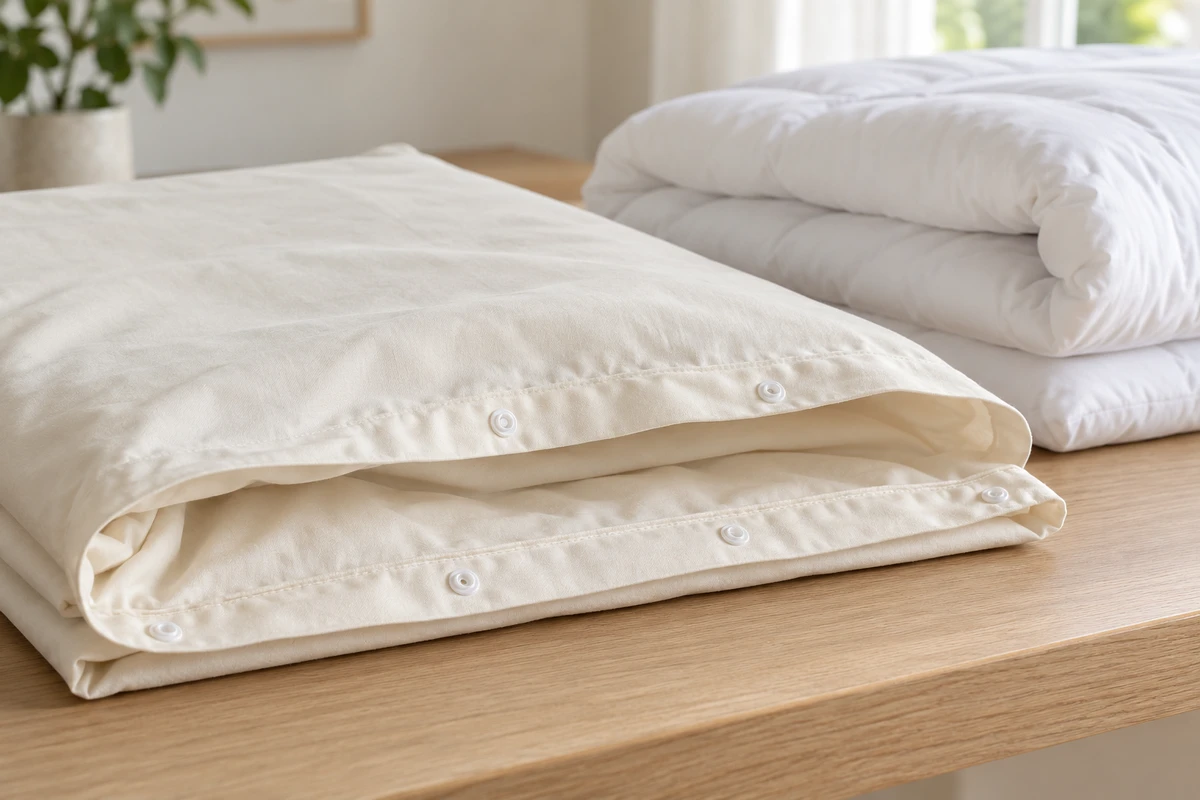
A duvet cover can have the ordered overall size and still leave the buyer with an unusable opening or an unresolved fastener. At receipt, separate two questions: can the identified insert enter through the supplied opening during ordinary use, and can the intended closure engage normally with that insert inside?
Neither an empty cover fastened for a photograph nor a matching size label answers both. The receiving record should identify where access or closure stops, without forcing the hardware, repairing the cover or guessing at the cause.
Follow the opening that actually arrived
Start with the order’s identified cover, intended insert and approved opening arrangement. Note the received cover variant, its condition and the insert used for the comparison. If only a different display insert is available, identify the substitution and leave the intended combination unresolved.
Locate the supplied opening and compare its type and position with the agreed reference. Keep an opening at the foot of the cover distinct from a side opening; keep a row of press studs distinct from a zip or buttons. These are observable construction differences, even before anyone decides whether the alternative is acceptable.
One manufacturer’s set illustrates why component names matter. IKEA’s PILTANDVINGE 805.792.09 information describes visible plastic press studs on the duvet cover and envelope closures on the pillowcases. That named-product distinction does not establish which closure a marketplace seller supplied. It does show why “the set closes correctly” is too broad a receiving statement. IKEA Canada PILTANDVINGE product details
Do not add features that were never specified. Internal ties, for example, should not become an assumed missing component merely because another cover has them. Record the actual agreed design and any supplied difference.
Separate access from final enclosure
Within the permitted ordinary handling, observe access using the intended insert and the product’s instructions. Keep the opening and the cover identifiable throughout. If the insert cannot enter normally, stop and record where access is restricted; do not compress it excessively, pull the opening wider or alter seams to continue.
A useful description locates the restriction: the insert reaches an opening corner but cannot pass normally, or part of the opening remains closed where the approved reference shows access. Such observations describe the received combination. They do not establish whether the cause is cutting, sewing, hardware placement, insert shape or a misunderstanding of the intended opening.
If access is completed normally, record that separately from the closure result. An insert inside the cover does not mean that the opening has been secured. Conversely, an empty cover that closes normally has not demonstrated access or closure with the intended insert.
Keep the insert’s condition and identity unchanged for this comparison. Swapping to a thinner or smaller insert may produce a different result, but it becomes an alternative combination requiring its own decision. It cannot quietly replace the bedding the buyer intended to retain.
Give each closure location an observable result
For a row of separate fasteners, define the viewing direction and identify each position from one end of the opening. Note which intended mating parts are present, which appear aligned during normal closure and which engage. Avoid “one button is bad” when the supplier cannot tell which fastener the receiver means.
For a zip, identify the opening and the location where ordinary movement stops, if it does. Visible fabric caught near a slider is an observation, not permission to tug it free or a diagnosis of a defective zip. Stop if fabric is trapped, resistance is unusual, parts are damaged or continued handling is uncertain. Do not cut threads, bend hardware, lubricate the closure or try to repair it during receiving.
Distinguish the following outcomes in words: engaged normally; not engaged; not attempted because a visible issue made handling inappropriate; and not observed. A blank entry is ambiguous. It can hide a fastener that was skipped after an earlier problem or was simply outside the agreed review.
This is ordinary usability observation, not repeated cycling or endurance assessment. No count of successful open-and-close cycles here would establish service life. A fastener that engages once can still require separate evidence for any durability claim.
Map the opening and its closure together
Use one sheet for each identified cover-and-insert combination. Above the entries, retain the order reference, cover ID, insert ID, unwashed/as-received condition, approved closure reference and observer. This original worksheet leaves the actual results for the receiver to complete.
| Part of the receiving question | What to enter | Decision the entry can support |
|---|---|---|
| Opening location and form | Edge, opening extent and actual closure type | Whether the received construction matches the reference |
| Insert access | Actual combination; access completed, stopped or not attempted | Whether ordinary entry was observed for this insert |
| Separate fastener positions | Direction convention, position and normal engagement result | Which particular closure needs attention |
| Continuous closure | Start/end reference and any visible stopping location | Where operation remains unresolved without diagnosing cause |
| Fabric at the opening | Visible trapping, interference or an unobserved area | Why handling stopped or what evidence is missing |
| Final enclosure | Insert present or absent; which closure portions remain open | Whether the requested combination was actually observed closed |
| Unresolved scope | Cover, opening or fastener IDs; owner and next question | A targeted response rather than a whole-set assurance |
The worksheet does not prescribe a sampling plan, force limit or repair procedure. It also avoids collapsing access and closure into a single pass box. If one is complete and the other is unresolved, the final line should preserve that distinction.
A fictional press stud that remains open
Imagine an invented receipt of cover D4 for insert I4. The agreed design has a row of five press studs at the foot opening. During the authorized ordinary review, I4 enters normally. Four studs engage, while the third position from the defined left side does not. The receiver stops at that position without applying more force. All identifiers, counts and events are fictional, not observations about IKEA or another real supplier.
The report can now say “access completed with I4; closure unresolved at position three on D4.” It should not say that the whole insert is the wrong size or that every closure is defective. Equally, four engaged studs do not satisfy an agreement calling for all five to function normally.
Suppose the supplier replies with an image of the cover’s overall dimensions and confirms that they match the order. The buyer can retain that answer while repeating the unresolved question: how will the particular non-engaging position be addressed? Overall dimensions and closure usability are different parts of the purchase.
If the supplier proposes replacing D4, record the proposed replacement and the later evidence for that item when available. If it proposes repair, obtain a separate authorized scope and disposition before anyone changes the received cover. Do not promise that repair is possible or assume that the buyer accepts an altered new product.
The review says nothing about unexamined covers or future washing. Keep those limits with the decision. An isolated closure observation is enough to describe this unit’s problem, but not to calculate a defect rate for the shipment.
Keep the pillowcase question proportionate
If pillowcases are included in the receipt, name their own opening construction and any particular unresolved observation. An envelope case does not have a missing zip merely because the duvet cover uses one. Likewise, a satisfactory pillowcase opening cannot settle the cover’s third press stud.
Keep those component notes alongside the set reference without turning the receiving review into another set-count or size-selection exercise. The question here is how the supplied openings work with the agreed bedding. Materials, care performance and long-term closure durability require their own evidence.
For buying coordination, start with Homeware textiles and send the product reference and precise opening issue through the Homeware sourcing page. Agree any physical review and reporting scope separately. The form accepts up to five PNG, JPEG, WebP or GIF images, at most 10 MiB each and 20 MiB total; arrange any original documents through an agreed separate exchange.
Frequently asked questions
Is a duvet cover acceptable if it closes when empty?
An empty-cover observation answers only that condition. Keep it separate from whether the intended insert can enter normally and whether the cover closes with that insert inside. If either part of the agreed combination has not been observed, say so. Do not replace the intended insert with another one merely to obtain a complete-looking closure.
What should I do if fabric is visibly caught at the zip?
Stop ordinary operation when fabric is trapped or continued handling is uncertain. Record the cover ID, zip location, visible interference and point where observation stopped. Do not tug the slider, cut threads or try a repair. The report can identify the interference without claiming that the zip, sewing or insert caused it.
Does one non-engaging press stud mean every cover in the shipment is defective?
No. Identify the particular cover and fastener position actually observed. That unit can have an unresolved closure even when its other studs engage. A wider decision needs the agreed review scope and relevant evidence; the individual finding should neither disappear inside a general acceptance nor become an invented shipment-wide defect rate.
Should a pillowcase use the same closure as its duvet cover?
Only if the agreed design requires that. A set can contain different opening constructions, as the named PILTANDVINGE example does. Record each supplied component against its own reference. A satisfactory envelope pillowcase does not resolve a duvet-cover fastener, and the duvet cover does not make a pillowcase zip an implied requirement.
Sources
Discuss a sourcing request related to this article.Check Duvet-Cover Closure and Insert Access on Arrival