
Rug Underlay Handover: Resolve the Coverage Plan
Compare the actual rug, underlay and floor plan with applicable coverage guidance before treating delivered packs as ready for placement.
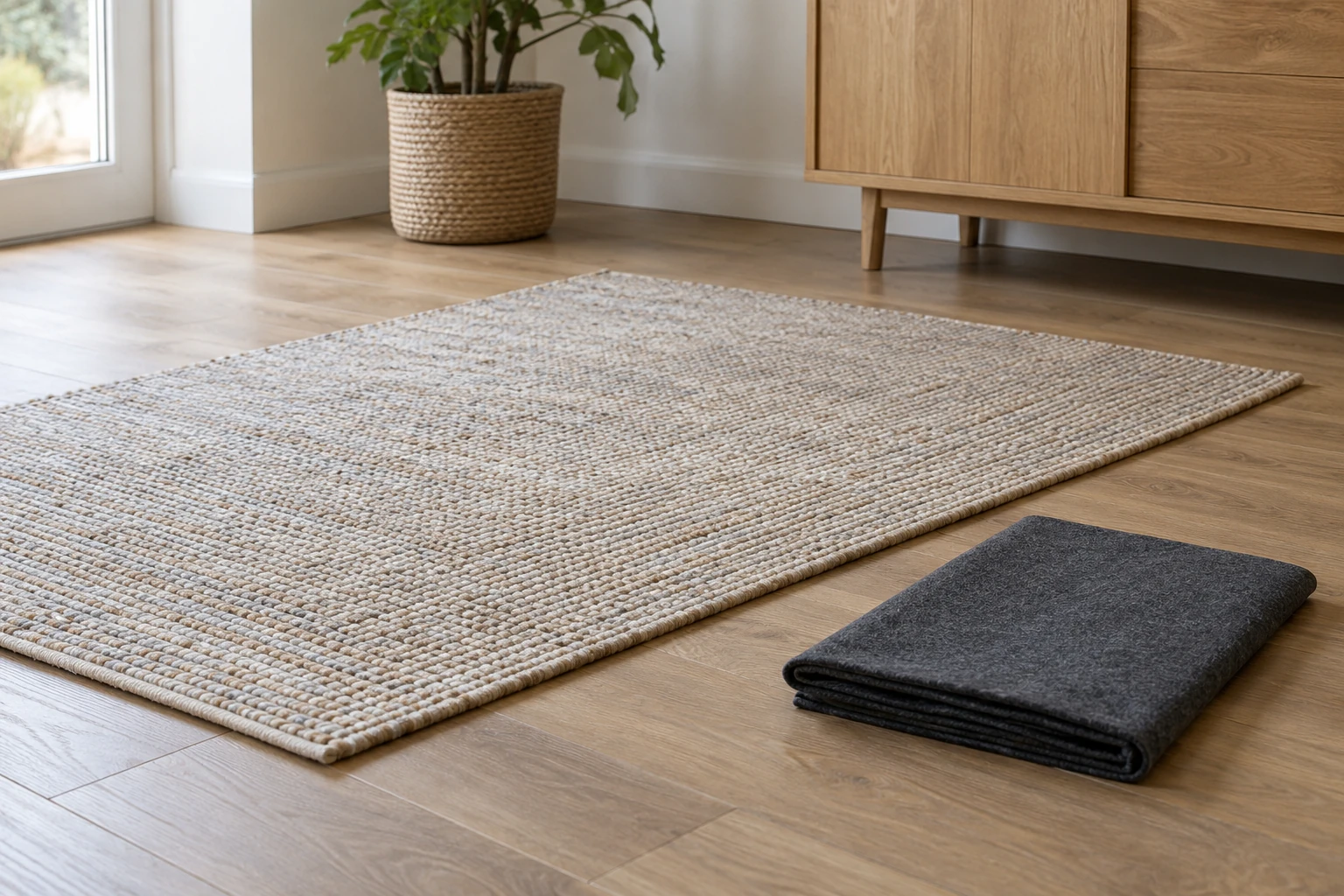
Before a rug reaches its intended floor, resolve what the underlay is supposed to cover. Matching a rug to a separately delivered underlay pack establishes which items belong together. It leaves a further question: does the proposed arrangement satisfy the actual product guidance at the planned location?
A useful handover joins the exact rug, specified underlay, floor context and applicable coverage requirement. Keep placement pending when the plan relies on an unexplained gap, an unapproved substitute or a different floor from the one reviewed.
Compare the instruction with the footprint in the plan
Identify the rug model and variant, then read the coverage requirement that actually applies. Keep the rug’s instructions and the specified underlay’s instructions available together. Where their relationship is unclear, obtain a product-specific answer rather than combining fragments into a new method.
IKEA’s LOHALS 502.773.93 page names STOPP FILT and calls for underlay beneath the entire rug. That statement belongs to this named rug. It demonstrates why a coverage instruction can matter beyond pack pairing; it does not prescribe an arrangement for another rug, underlay or floor. LOHALS underlay guidance
Translate the applicable coverage requirement into a review question for the actual proposed layout. Does the plan represent the whole required area, or only a central patch? Are the relevant outlines and units explicit? A sketch with two unlabeled rectangles may look complete while representing the wrong rug variant.
Do not add a universal edge setback or trimming allowance. If the manufacturer’s general wording leaves a detail unclear, ask how that detail is to be resolved for the exact combination. The buyer’s drawing should reveal the question rather than quietly answer it through an invented dimension.
Use the intended floor as an input
Name the room and the floor finish or system reference available from the responsible property owner. Include known relevant conditions in the question to the product or flooring reviewer. If the finish cannot be identified, say so. A photograph that shows its colour cannot establish its material or compatibility with an underlay.
Keep the proposed location stable while the arrangement is reviewed. Moving a rug from one room to another may change the floor information on which the earlier answer depended. A buyer who wants flexible room use should ask about those actual intended locations, rather than extending one answered location to the whole building.
The handover should record an applicable compatibility answer where needed, not promise that a pad protects every floor or prevents all movement. Coverage and compatibility are related inputs with different evidence. An outline that follows the required coverage does not itself resolve the floor question.
Work with the supplied underlay rather than its package silhouette
Identify the exact underlay variant and its stated usable dimensions or supported configuration. A folded accessory pack cannot show its eventual floor coverage. Nor does a retailer’s “complete with” suggestion establish that the accessory was purchased or that the delivered variant is the intended one.
Compare the proposed underlay arrangement with the rug’s relevant footprint using consistent units and identified source dimensions. For a shaped rug or an unclear usable area, request an applicable arrangement from the responsible product owner. Do not approve it merely because the underlay’s total area seems large enough.
If the supplied item cannot answer the required layout as documented, the buyer has concrete alternatives. Request the correct supported underlay configuration, ask the responsible owner to review a different rug-and-underlay choice, or postpone placement while the answer is obtained. Cutting, piecing together spare pads or changing the rug is not an informal fourth option supplied by this article.
Build a coverage worksheet around the floor view
Use a plan-view reference as the centre of this original editorial worksheet. It may be an identified proposal rather than an installation photograph. Make that status explicit.
| Floor-view question | Information to enter | What leaves placement unresolved |
|---|---|---|
| Which rug outline is represented? | Exact rug, variant and dimension/shape source | Sketch belongs to another size or omits the shape basis |
| What is beneath it? | Room and actual floor reference | Floor unidentified or changed since review |
| Which underlay is proposed? | Actual product, supplied variant and supported configuration | Generic pad description or unverified substitution |
| What coverage is required? | Full applicable wording and source | Requirement shortened or inferred from an image |
| What does the drawing cover? | Identified rug and underlay outlines in consistent units | Missing area, ambiguous boundary or unexplained arrangement |
| Which practical decision remains? | Product-specific clarification or revised supported proposal | Unanswered detail treated as permission to improvise |
| Who completes placement? | Accepted scope and applicable instructions for the responsible person | Delivered packs described as an already completed arrangement |
Retain a separate conclusion for coverage and for the floor-specific answer. “Coverage proposal matches the applicable requirement; floor compatibility unresolved” is a useful bounded result. It prevents a clear drawing from closing a question that the drawing cannot answer.
Fictional decision: a centre-only pad under a larger rug
Imagine fictional rug R9 and underlay proposal U9 for room F. The actual applicable guidance in this invented scenario calls for underlay beneath the entire rug. The handover drawing shows U9 only across the centre, leaving part of the rug outline outside it. All item references, guidance conditions and replies in the example are fictional.
The receiver has both labelled packs. That successfully answers delivery association but does not resolve the drawing. The buyer returns the centre-only proposal and asks for a supported arrangement meeting R9’s coverage requirement on floor F.
One response says there is enough spare underlay elsewhere to fill the remaining area. It gives no applicable permission for a multi-piece arrangement. The buyer leaves that option pending rather than issuing a joining or cutting instruction. A second response identifies a different supported underlay variant and supplies a corresponding plan for review.
Suppose the revised plan answers coverage, but F’s floor finish has not been identified. Record the coverage answer and retain the floor question. The buyer obtains that information for the responsible review before describing the rug as ready for placement. There is no reason to discard the corrected plan, and no basis to call the whole arrangement complete yet.
The final handover, once the outstanding answers are actually returned, can name R9, the selected underlay, F and the applicable placement references. This fictional process includes no floor trial, slip test, curl treatment or installed-performance result.
Preserve the arrangement when a room changes
Keep the approved plan with the exact pair of products and destination floor. Reopen the affected question if an underlay is substituted, the rug size changes or the room assignment moves. A pack label reused after a substitution can preserve the appearance of a match while losing the arrangement that was reviewed.
For Homeware textiles, a sourcing enquiry can state the rug, actual underlay and the coverage question with an image preview of the proposal. The form accepts supported links, descriptions and images, not PDF, CAD or ZIP uploads. Agree any document exchange and physical placement work separately. The immediate result to seek is an answer for this floor arrangement, with performance claims left within the evidence actually available.
Frequently asked questions
What should a rug underlay coverage handover include?
Include the exact rug and underlay variants, their applicable instructions, the intended floor reference and an identified plan showing the proposed coverage. Record any unclear boundary or unsupported configuration. Keep coverage and floor compatibility as separate conclusions so a resolved drawing does not conceal an unanswered floor question.
Is the correct underlay pack enough to finish the rug handover?
The correct pack establishes accessory association, but placement still needs the actual usable configuration and applicable coverage requirement. Confirm that the plan represents the delivered variants and intended floor. A folded package photograph or matching label alone cannot show how the underlay is meant to occupy the rug footprint.
Can spare underlay pieces fill gaps in the proposed coverage?
Do not infer that permission from available spare area. Obtain an applicable answer for the actual product and proposed configuration. If no supported arrangement is established, request a suitable variant or reconsider the approved combination. The worksheet does not supply cutting, joining, layering or patchwork instructions.
Does a complete coverage plan establish slip resistance or floor protection?
No. The plan describes an arrangement against its applicable coverage requirement. It does not provide a slip test, an all-floor compatibility conclusion or a protective-performance guarantee. Keep any product-specific floor conditions and responsible placement guidance with the handover, and reopen the relevant question when the floor or underlay changes.
Sources
Discuss a sourcing request related to this article.Rug Underlay Handover: Resolve the Coverage Plan