
Tempered Glass Handover: Check the Change from Cold to Warm
Preserve the exact glass model’s temperature-change warning when a beverage-service note relies on a warm-drink suitability claim.
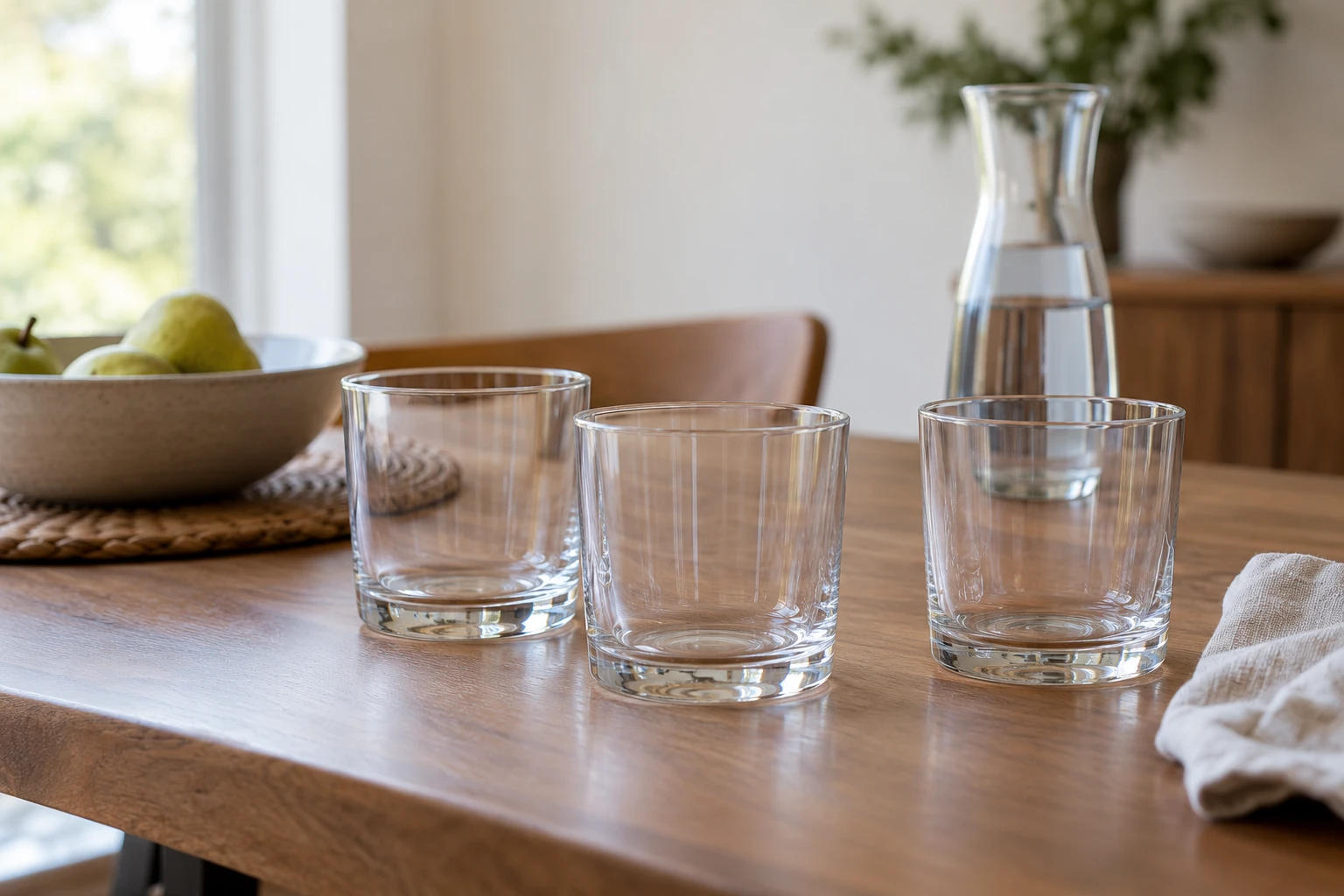
A statement that a glass can hold warm drinks does not answer every way a recipient might serve them. The glass’s condition immediately before filling matters to the proposed routine. If a plan takes a cold glass directly to warm-drink service, retain the exact model’s temperature-change caution and resolve that transition before putting it in the handover.
This service transition for tempered glass is a different decision from whether the goods arrived intact or how they were packed. It concerns the ordinary service step that follows delivery. A short recipient note should preserve the relevant warning instead of turning beverage suitability into an unrestricted temperature claim.
Ask where the glass comes from immediately before service
Identify the exact model and variant, then ask the recipient to describe the step before the intended drink is served. Is the glass being taken from a deliberately cold location, moved from another service task, or returned from cleaning? Record the actual proposed state; do not make an assumption from the drink’s name alone.
Keep the prior state and the intended beverage statement in separate fields. “Used for warm drinks” describes the requested role. “Taken straight from a cold location” describes a transition that needs to be checked against the product guidance. Combining them into “hot-and-cold glass” hides the sequence that the reviewer needs to understand.
This is a documentary review of the intended routine. Do not chill, heat or fill a sample to make the question more concrete. A written description of the actual proposed transition gives the responsible person a useful question without creating a thermal-shock trial.
Keep the caution beside the benefit
IKEA’s POKAL 102.704.78 page describes warm-beverage use and warns against sudden temperature changes, specifically including warm liquid entering a cold glass. It also cautions against using damaged, scratched or chipped glass. Those statements belong together for that named item; neither its material name nor its beverage description establishes permission for another glass. IKEA POKAL product details and safety guidance
For the selected product, preserve the full applicable instruction and identify which warning answers the proposed service step. A recipient may otherwise see the warm-drink sentence in a catalogue and never see the qualification in the care section.
Do not add a safe temperature difference or waiting interval when the source does not provide one. Nor should a buyer invent a conditioning procedure to convert the prohibited or unresolved transition into a permitted one. Ask for product-specific guidance if the required service routine cannot be defined from the instructions available.
There are different documentary outcomes. An explicit warning that addresses the planned transition is a reason to remove that step. Missing information leaves the step unresolved. Guidance for a similar-looking product does not settle either case for the actual glass.
Trace the service decision with a transition worksheet
Use this original worksheet for the particular beverage-service routine, without treating it as a test record or operating procedure.
| Service question | Information to record | What it resolves |
|---|---|---|
| Which glass? | Exact maker, model, variant and applicable instruction | Whether the guidance covers the item being handed over |
| Which beverage-use statement? | Supported role and its original conditions | What the source actually permits or describes |
| What happens immediately before filling? | Recipient’s proposed prior glass state and preceding task | Which change the handover must address |
| Which temperature-change caution applies? | Complete relevant wording and source location | Whether the proposed transition conflicts or remains unanswered |
| What cleaning context affects the note? | Applicable care guidance and any unsupported shortcut | Which separate cautions must remain visible |
| What service step changes? | Removed transition, revised plan awaiting review or different identified product | How the buyer will close the practical mismatch |
Write “not established” where a prior state or use condition is missing. Filling that cell with “normal” makes the sheet look complete without telling the recipient or reviewer what will happen. Ask the person who operates the routine to supply the actual description.
Keep the worksheet attached to the intended service role. A different location, drink-service pattern or glass model may introduce a different question, even if the number of glasses stays unchanged. Review those changes before recycling the old note.
A fictional room-service instruction
Imagine a fictional household hosting arrangement using glass G6. The matched product page describes warm beverages and warns against the proposed abrupt cold-to-warm change. The service note nevertheless says to take G6 directly from a cold location for a warm drink because the catalogue permits that drink. All identities and circumstances in this example are invented.
The buyer removes the unsupported direct-transfer step. It retains the warm-beverage description with its full applicable caution rather than deleting the warning to make the note shorter. Nothing is poured into a cold glass to find out whether the warning matters.
The recipient then explains that a single uninterrupted cold-storage-to-warm-service route is essential to the original plan. That makes the selected routine unresolved. The buyer can ask the responsible person to develop a different supported service plan, or seek a different identified vessel whose guidance answers the actual requirement. Neither suggestion is automatically a usable procedure.
Suppose the buyer asks for a revised plan, but the first reply merely adds an arbitrary pause. Without an applicable basis, the pause does not close the question. The revised handover remains pending and identifies the missing product-specific guidance. A number written into the note is not evidence of a safe transition.
If a later answer establishes a supported routine, the buyer can retain its precise scope and the relevant manufacturer instructions. If no suitable routine is available, reconsider the vessel or service requirement. The useful outcome is a genuine change to the plan, not a more reassuring description of the same unresolved step.
Keep cleaning permission from swallowing other cautions
For its named POKAL glass, IKEA also identifies dishwasher suitability while advising against surface scratching, including contact with cutlery in the dishwasher. That is a model-specific reminder that a cleaning permission can coexist with handling cautions. It supplies no universal rack arrangement or dishwasher cycle for other glassware. IKEA POKAL materials, care and safety information
Read the actual selected glass’s care information alongside the intended transition. Do not rewrite dishwasher suitability as permission for any subsequent temperature change. If the glass returns from cleaning before another service task, describe that real sequence for the relevant review rather than assuming the two permissions join automatically.
If damage or uncertainty about an item’s condition becomes apparent, stop its proposed use and refer it to the responsible person under the applicable guidance. Do not handle a suspect edge or reuse a questionable glass for a trial. This service note does not diagnose arrival damage, set an inspection sample or decide how damaged glass should be moved or discarded.
The recipient needs the exact glass reference, the selected service role, the full relevant cautions and any excluded transition. Those details can remain concise while the complete current instructions stay available.
See Homeware kitchenware for wider product context. A Homeware sourcing enquiry can state the glass reference, proposed prior state and intended service change through a supported link, description or image. Confirm the actual clarification scope; do not treat a supplier reply as an independent thermal assessment.
Frequently asked questions
Can a glass approved for warm drinks be used straight from a cold setting?
Check the exact model’s temperature-change guidance rather than relying on beverage suitability alone. If the proposed transition conflicts with its caution, remove that step. If the instructions do not answer the real sequence, request product-specific guidance and leave it unresolved. This article supplies no safe temperature difference or workaround.
Does tempered glass mean temperature changes are unrestricted?
No unrestricted-use claim follows from that material description. Keep the actual model’s instructions with the intended beverage and prior glass state. A similar appearance, a favourable catalogue phrase or a previous uneventful use does not establish the conditions for a new service transition.
Can I add a waiting time if the instructions give none?
Do not invent an interval to close the handover. Ask the responsible provider for guidance that addresses the exact glass and proposed routine. Until there is an applicable basis, a pause written into the note remains an unsupported assumption. Do not conduct a hot-and-cold trial to choose a number.
Does dishwasher suitability remove the need to read other glass care warnings?
No. Preserve any applicable surface, handling and temperature-change cautions alongside the cleaning permission. Describe the actual next service step if it raises an unanswered transition question. The POKAL example includes both dishwasher suitability and separate cautions, but its details cannot establish a cycle or handling method for another supplier’s glass.
Sources
Discuss a sourcing request related to this article.Tempered Glass Handover: Check the Change from Cold to Warm