
Separate Woven-Basket Variation from Unresolved Damage
Compare the opening, weave, handles and base pads against the approved basket reference so handmade appearance does not excuse missing components.
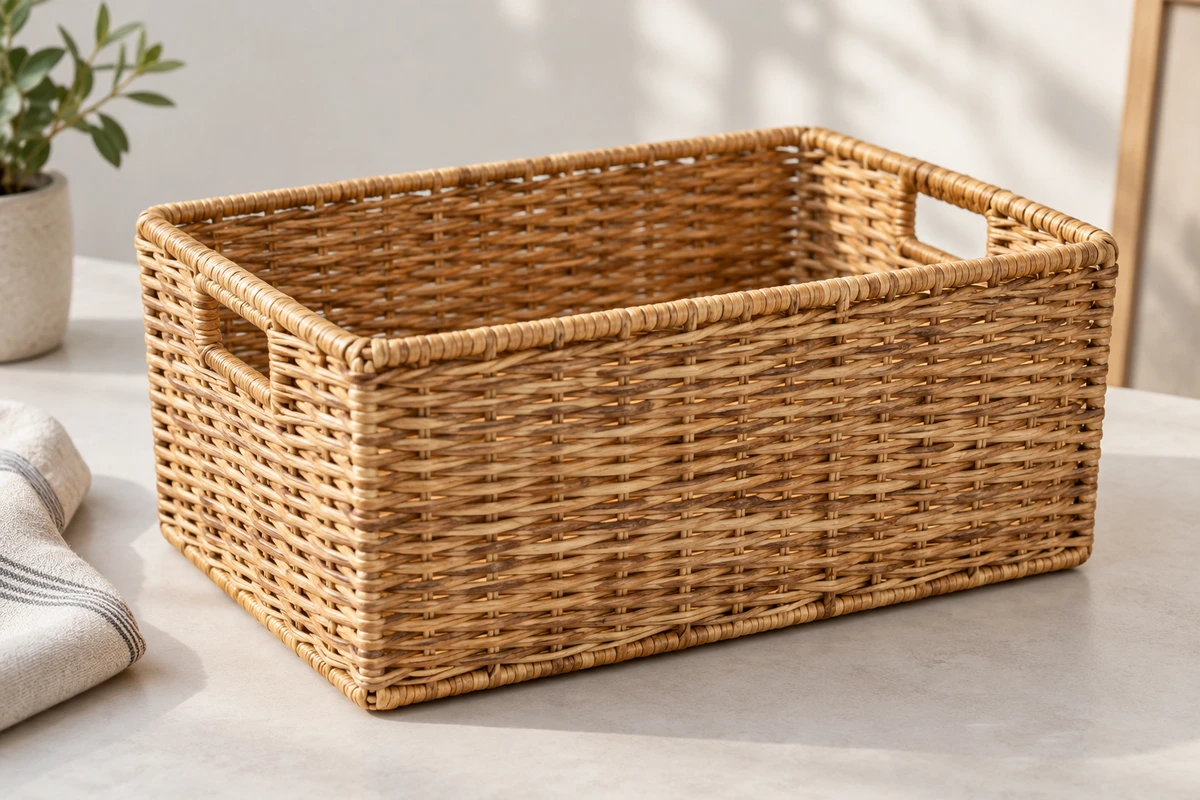
A woven basket can look different from its neighbour and still match an agreed handmade reference. A missing specified base pad or an exposed end needs a different decision. At arrival, compare the actual opening, weave, handles and underside features separately so that “handmade variation” does not become a blanket answer to every discrepancy.
The aim is a scoped appearance and completeness decision for the baskets actually reviewed. Work from the approved product reference and ordinary safe views. Do not load the basket, pull its handles, touch suspect ends or modify the weave to decide whether it is acceptable.
Establish what the handmade reference actually permits
Identify the reference for the received model and size, including any approved range of appearance. A reference might distinguish acceptable differences in weave spacing or overall outline while still requiring a particular handle construction and a complete set of base pads. Keep those requirements together, but do not let the appearance allowance replace the component list.
IKEA’s BRANÄS rattan basket is a concrete manufacturer example. Its product description identifies handwoven construction, handles and pads underneath, and notes variation associated with handmade products. Those are details of that named basket. They do not set a damage allowance, load rating or acceptance rule for an unknown supplier’s basket. IKEA BRANÄS product details
Use the actual order to decide which differences were contemplated. “Handmade” alone supplies no agreed boundary. If the only approved photograph hides the base or a handle attachment, record that gap and request the applicable detail. Do not choose whichever newly supplied image makes the received basket look closest after the discrepancy is raised.
Start at the opening, where shape and finish meet
Describe the opening as received in a consistent orientation. Identify the front using the product’s existing distinguishing feature or an external receiving reference, then describe locations as front rim, rear corner or left opening edge. This makes a local observation understandable without marking or changing the basket itself.
Compare the visible outline and weave at the opening with the approved reference. A slightly different contour is an appearance question against that reference. A local strand projecting into the opening is a separate observation, even if the overall shape falls within the approved appearance range.
Do not push the opening back into shape, squeeze the sides or force the basket into furniture to make the comparison. This arrival review does not establish fit in a named storage system. If an opening difference creates a fit question, retain the receiving observation and route that question to the separate agreed fit assessment.
An overview image should show where the concern sits on the basket. A close image can then show the local feature without losing its position. If the available view cannot distinguish an intentional woven end from a damaged one, describe the visible feature and leave that interpretation for resolution.
Separate weave variation from a localized unfinished area
Compare the pattern as well as isolated details. Where the agreed handmade reference allows a range, ask whether the observed spacing or alignment falls within it. Avoid inventing a millimetre allowance from a photograph or treating exact uniformity as a requirement that was never agreed.
Then look for distinct local observations: an apparently loose strand, an exposed end, a visibly interrupted woven area or a feature that differs from the approved construction. Use descriptive wording. “End projects beyond the inside rim at the rear corner” is more useful than an unsupported conclusion about how or when it was damaged.
Do not run a hand or cloth over a suspect area to find out whether it catches. Do not trim an end, glue a strand or reweave a patch. A proposed correction should remain a proposal until the responsible parties authorize the work and its review. Altering it first removes the original condition from the receiving decision.
Keep each concern attached to its basket. Two photographs of one exposed end are two views of one observation. Several concerns on the same basket should not become several affected baskets in a summary.
Look at handles and base pads as specified components
For handles, compare their visible form and accessible attachment locations with the approved design. Record any visible gap, displaced portion or unexplained difference at a specific side. An intact-looking attachment does not establish handle strength, and the absence of a photograph does not prove an attachment is missing.
For pads underneath, use the order’s required count, locations and appearance. Record which specified positions are visible and whether a pad is present there. If the basket cannot be viewed safely in the permitted scope, record the underside as unexamined. Do not pull on a handle to gain a view or remove a pad to inspect its underside.
A present pad answers a limited completeness question. It does not prove that the basket will protect a particular floor, shelf or furniture finish. Similarly, a supplier’s “natural variation” explanation about the weave does not answer why a specified pad is absent. Ask for the component-specific response.
Build a basket-zone worksheet
Use one sheet per identified basket or keep individually identified entries within a defined reviewed group. Put the approved handmade reference and component configuration at the top. This is an original editorial decision aid, not a test method or universal defect standard.
| Basket zone | Reference question | Arrival observation to record | Decision still needed |
|---|---|---|---|
| Opening and corners | What outline or appearance range was approved? | Location of shape or rim differences | Within reference, outside it or unclear |
| Side and interior weave | Which pattern variation was contemplated? | General spacing versus a localized interruption | Appearance decision for the actual observed area |
| Visible ends | What finish is shown at this location? | Protrusion or exposed end, from a safe view | Clarification or hold; no touching or trimming |
| Each handle attachment | What visible construction is specified? | Which side, location and discrepancy | Configuration or condition question; no strength claim |
| Base-pad positions | Which pads and locations are required? | Present, apparently absent or not viewed | Component completeness for this basket |
| Basket-level outcome | Which requirements and views were covered? | Open concerns and unexamined regions | Named scope accepted or retained on hold |
The useful summary explains why a basket is held. It might be a missing component, a departure from the appearance reference, or an unresolved local condition. Keeping those reasons separate prevents a general aesthetic approval from clearing an unrelated concern.
A fictional pair with different weave spacing
Imagine two fictional baskets, W1 and W2, received against reference R4. R4 includes an approved range of handmade weave appearance and requires four pads underneath each basket. The reviewed weave spacing differs slightly between W1 and W2, and the appointed appearance reviewer finds both within that range. All identifiers, counts and outcomes in this example are invented.
The safe underside views show four pads on W1 and three on W2, with the fourth specified location visible and apparently empty. W1’s reviewed appearance and pad-presence questions can be recorded as matching their respective requirements. W2’s weave appearance can also match while its pad-completeness question remains on hold. The result is not “one good basket and one bad weave.”
Suppose the supplier replies that every handwoven piece is unique. That statement addresses neither the missing pad nor the agreed four-pad configuration. The next request should identify W2 and the specific empty position, then ask for the proposed resolution under the order terms.
If a correction is later authorized, retain the original observation and review the corrected scope separately. Do not backdate the original receipt as complete. Even after the pad question is resolved, no load, handle-strength, furniture-protection or splinter-safety conclusion follows from this example.
Ask for a precise resolution while preserving the product
A concise discrepancy message identifies the basket, the approved zone or component, the observed difference and the decision required. Ask for a clarification or proposed remedy without assuming replacement availability or assigning a manufacturing or transit cause that the evidence cannot establish.
For category context, see Baskets and storage. Use a Homeware sourcing request to describe the affected zone and the reference, with a supported product link, text or image preview. Agree any additional receiving work and remedy arrangements separately. The value of the review is a specific, answerable product question while the as-received condition is still intact.
Frequently asked questions
Is a difference between two handwoven baskets automatically acceptable?
No. Compare each basket with the appearance range actually agreed for the order. A difference may fit that range, fall outside it or remain unclear. Keep component completeness and localized concerns separate so approval of weave variation cannot silently clear a missing pad or an exposed end.
How should an exposed woven end be checked?
Record its visible location and appearance from a safe ordinary view, then ask for the relevant reference and a disposition. Do not touch it to judge sharpness, run fabric across it, trim it or reweave the area. A photograph can document the concern without establishing a splinter-safety verdict.
Do pads underneath prove the basket will not mark furniture?
No. Presence of the specified pads is a component check only. The particular furniture surface, product instructions and any protection claim need their own appropriate assessment. Do not drag the basket on a shelf or treat the words protective pads on another manufacturer’s product page as evidence for this basket.
What if the approved reference does not show the handles or base?
Identify the missing reference detail and leave that part of the comparison unresolved. Ask for the configuration tied to the actual approved model and order. A new generic catalogue image should not be treated as the original agreement or used to approve unexamined components by implication.
Sources
Discuss a sourcing request related to this article.Separate Woven-Basket Variation from Unresolved Damage