
Top Up the Missing Cutlery Type Instead of Full Sets
Compare single-type cutlery packs with mixed sets using the actual missing utensil, current pack contents and extra pieces each option adds.
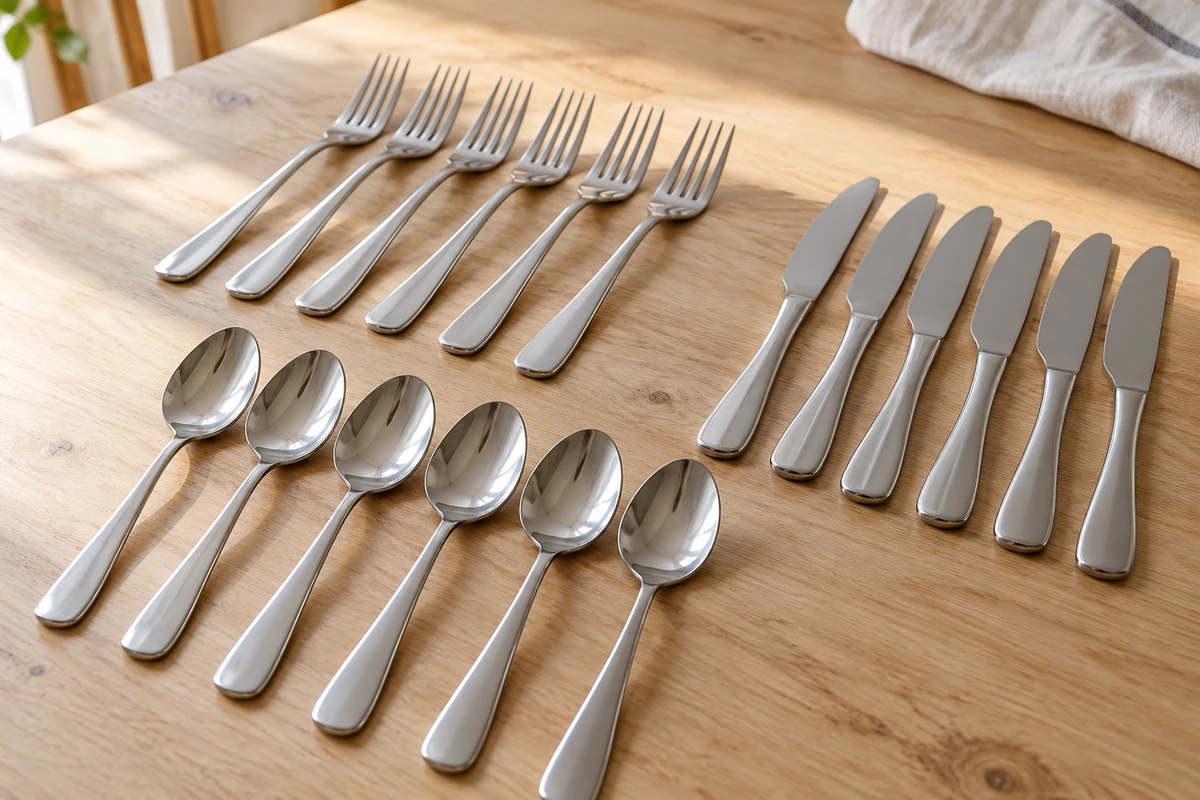
Top up the cutlery type that is actually short before buying another complete flatware set. A drawer can have enough knives and forks while running out of teaspoons. Repeating a mixed set may restore the spoon count but also add other utensils that have no current place in the household plan.
A comparison of cutlery top-up packs should name the actual utensil, retained series and required count. It then compares single-type packs with mixed-set contents. This is a replenishment decision for an established drawer, not a calculation of complete dinnerware place settings or a finding that new pieces will exactly match older ones.
Count demand by the utensil people actually need
List the relevant types separately: dinner knife, dinner fork, tablespoon, teaspoon or another specifically named piece. Use the household’s real target for each type rather than assuming every meal requires an identical number of every utensil.
An eight-person drawer does not automatically need eight of every possible spoon. The target may depend on how the household uses that particular type and which utensils are already included in the plan. State the chosen count without converting it into a universal hosting rule.
Next, record the usable retained count for the same type and reference. Keep missing or already retired pieces distinct from items temporarily elsewhere if their return matters to the decision. Do not diagnose wear or prescribe a condition test here; the count imports the household’s established eligibility decisions.
The type-specific shortfall is the target less the retained eligible count, with no additional purchase needed where that difference is zero or negative. Keep the result in individual utensils. The seller’s pack size is a later conversion, not the unit used to define the shortage.
Make teaspoon more precise than small spoon
A catalogue may distinguish coffee spoons, teaspoons, dessert spoons and larger dining spoons. Retain the exact product designation and reference. If the desired utensil has an established length or shape reference, keep it beside the type name instead of treating every small spoon as equivalent.
IKEA’s DRAGON teaspoon 805.781.01 is listed at five inches. Its product page describes separate four-piece packages of forks, knives, spoons and teaspoons. This shows a named single-type refill format, not a promise that every series or historical version is sold the same way. DRAGON teaspoon and separate-pack details
For the buyer’s own drawer, ask whether the current proposed piece matches the required model and intended role. A common series name may help locate it, but does not establish an exact historical finish, profile or feel. Keep any appearance requirement explicit and unresolved where the offered piece has not been reviewed for it.
Do not let a seller substitute a coffee spoon simply because it is the only small spoon in stock. The buyer may approve a changed requirement, but that is a deliberate choice rather than a numerical solution to the original shortage.
Expand mixed sets before comparing them
Ask for the count of each utensil in the actual mixed set. A 16-piece title could describe different assortments; it does not tell you how many teaspoons the purchase includes. The photograph may show serving utensils or styling pieces that are outside the priced contents.
For a type-only pack, confirm the current pieces per pack and selected reference. Old product pages, remembered pack sizes and another market’s format should not supply the count for a present offer. Keep the seller’s actual reply alongside the calculation.
Then compare the number of packs needed to cover the short type. Show surplus pieces by type, including zero-demand types in the mixed offer. An extra knife is not a fraction of a missing teaspoon, and a large total piece count is not evidence of a closer match to the household need.
Use a drawer top-up worksheet
Complete the target and retained-count columns before entering offers. That keeps a large bundle from quietly redefining the requirement.
| Utensil decision | Household entry | Offer entry |
|---|---|---|
| Exact series and type | Retained model and required role | Current proposed reference and any difference |
| Target count | Chosen individual pieces for this type | Not determined by seller pack size |
| Eligible retained pieces | Count already available for this role | No assumed replacement of adequate stock |
| Type-specific shortage | Positive difference between target and retained count | Quantity that the purchase must cover |
| Single-type pack | Required type only | Pieces per pack, packs purchased and remainder |
| Mixed set | Exact assortment being considered | Purchased count of every type, including extras |
| Appearance decision | Required degree of coordination with retained pieces | Current evidence and any unresolved historical match |
A complete comparison needs actual offer terms as well as counts. If the type-only pack is unavailable, do not invent its price or treat it as an immediately purchasable alternative. The decision may be to accept a known mixed-set surplus, choose an approved alternative piece or keep looking.
Fictional decision with three teaspoons missing
Imagine a fictional household has a target of eight knives, eight forks and eight teaspoons. Its eligible retained drawer holds eight knives, eight forks and five teaspoons. All quantities and the target are invented for this example. The shortfall is three teaspoons; knives and forks have no purchase requirement.
Offer T is one four-teaspoon pack of the accepted current reference. It brings the teaspoon count to nine, leaving one teaspoon beyond the eight-piece target. It adds no knife or fork.
Offer M is a fictional 16-piece mixed set containing four knives, four forks, four larger spoons and four teaspoons. One set also covers the three-teaspoon shortfall, but it adds four unwanted knives, four unwanted forks, four larger spoons with no stated demand and the same one extra teaspoon.
The buyer prefers T’s assortment because it answers the short type with only one additional piece. This conclusion says nothing about relative prices. If the mixed set has a lower actual total, the buyer can weigh that quote against the thirteen pieces beyond the current requirement, but should not assign an invented resale value to them.
Suppose the T offer instead turns out to be four coffee spoons. It no longer answers the established teaspoon requirement. The buyer asks for the correct piece rather than accepting the word spoon as sufficient. Offer M’s numerical coverage remains visible, but any historical appearance match still needs its own answer.
Alternatively, suppose a return check finds one of the missing teaspoons already available. The shortage falls to two. A four-teaspoon pack now creates two extras, so update the comparison before ordering. The original pack preference need not change, but its consequence should be accurate.
Decide how closely the new pieces must coordinate
Some households accept a functionally appropriate type from another series; others want the existing pattern repeated. Name that preference rather than assuming either one. If exact coordination is important, request the current reference and suitable appearance information before committing to the top-up.
An older utensil’s finish may not be represented by a new catalogue image. Do not promise indistinguishable appearance or feel from the series name alone. The decision can remain conditional on the buyer’s review while the pack arithmetic is already complete.
If the matching type is no longer confirmed in the current offer, distinguish continuing the search from deliberately starting a different series. Buying one alternative teaspoon pack does not require replacing every adequate knife and fork unless the buyer separately chooses a full-drawer change.
See Homeware kitchenware for category context. A Homeware sourcing enquiry can state the exact short utensil, retained reference, required count and acceptable appearance boundary. Use supported product links, descriptions or permitted images. Request current type-pack contents and a complete mixed-set breakdown so the comparison stays focused on the missing utensil.
Frequently asked questions
Can I replace missing teaspoons without buying a whole cutlery set?
A type-only pack may answer the shortage when it supplies the required current reference and is actually offered. Count the missing teaspoons separately from knives and forks, then confirm pieces per pack. The named DRAGON format illustrates this possibility, but does not prove that every range or seller supplies individual utensil types.
Are coffee spoons and teaspoons interchangeable in a reorder?
Do not assume so. Preserve the exact desired utensil designation and any established model, length or shape reference. If the seller offers a different spoon, ask the buyer whether that changes the requirement acceptably. A similar size or the general word spoon cannot settle the original role-specific request.
How do I compare a four-teaspoon pack with a mixed set?
Start with the actual teaspoon shortage and expand both offers into individual utensil counts. In the fictional three-needed example, four teaspoons create one extra teaspoon. A mixed set may create the same spoon remainder plus unneeded knives, forks and larger spoons. Compare actual complete offers without assigning speculative resale credit to those extras.
Will new cutlery exactly match an older set with the same series name?
The name helps identify a candidate but does not establish an exact historical finish, shape or feel. State how closely the household wants the pieces to coordinate and obtain current model-specific information. Keep that appearance decision distinct from correct pack arithmetic, and do not replace adequate other utensil types unless the buyer separately chooses to do so.
Sources
Discuss a sourcing request related to this article.Top Up the Missing Cutlery Type Instead of Full Sets